The Missing Half of Intelligence in the Age of A.I.
By
Virta Ventures
ON
March 25, 2026
Everyone is talking about AI. And they should be. The research is clear: the smartest possible combination is human + AI. But while the world obsesses over the AI half of that equation, almost no one is talking about the other half — the human.
That's a mistake. And here's why.
We've been wrong about what makes humans smart.
Harvard evolutionary biologist Joe Henrich spent years reviewing the popular explanations for human dominance on this planet — walking upright, opposable thumbs, raw intelligence. His conclusion? None of them hold up.
When you put toddlers (pre-cultural humans) head-to-head with chimpanzees on cognitive tests for space, quantities, and causality, the results are essentially tied. Chimps and orangutans can match us or beat us across the board — with one stunning exception.
Social learning.
On social learning, humans don't just win. We leave every other species in the dust.
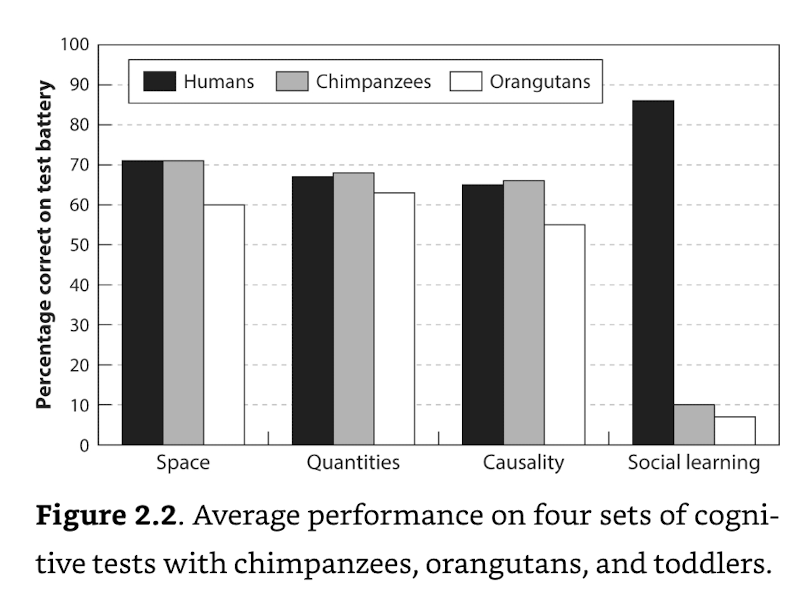
This is our actual superpower. Not raw intelligence — but the ability to accumulate, transfer, and build on knowledge collectively across generations. Every smartphone, every financial instrument, every breakthrough in medicine is the product of thousands of years of inherited, compounding human wisdom.
The same is true in investing. The best investment insights rarely come from a single brilliant analyst staring at a spreadsheet. They emerge from networks of people sharing partial information — operators, researchers, builders, and investors collectively making sense of a changing world.
So what does this have to do with AI?
In the industrial age, the challenge was updating skills — routine tasks, procedural habits. But AI does skills better than humans. The disruption we're facing now isn't just a new category of skill. It's a challenge to the very foundations of how we work together and make decisions.
The real work goes beyond building better digital software. It's updating our cultural software.
Culture is so much more than the office snacks or the dress code. It's an evolved toolkit — the assumptions, values, and mental models that determine how a group survives in a given environment. The Inuit developed a culture precisely adapted to the high Arctic. The Bedouin to the desert. Place either group in a different environment, and their cultural toolkit stops working. Likewise, if you drop a Googler into Tesla, there’s likely going to be a culture shock and a period of adjustment.
We are now in a moment of radical environmental change — both physically, through climate change, politically through geopolitical shocks and in the business environment, through AI. The organizations that thrive will go beyond aiming at the "best" culture and focus on continuously updating their cultural software in response to ever-changing conditions.
What does this look like in practice?
At Virta, we've seen this play out with our founders. Founders project confidence outward — to their teams, to their investors, to the market. That's necessary. But it can also leave them without a space to be genuinely uncertain, to surface half-formed ideas and to voice the things they don’t yet know. That's why we encourage our founders to work with coaches: to create the environment where the leader themselves can keep learning.
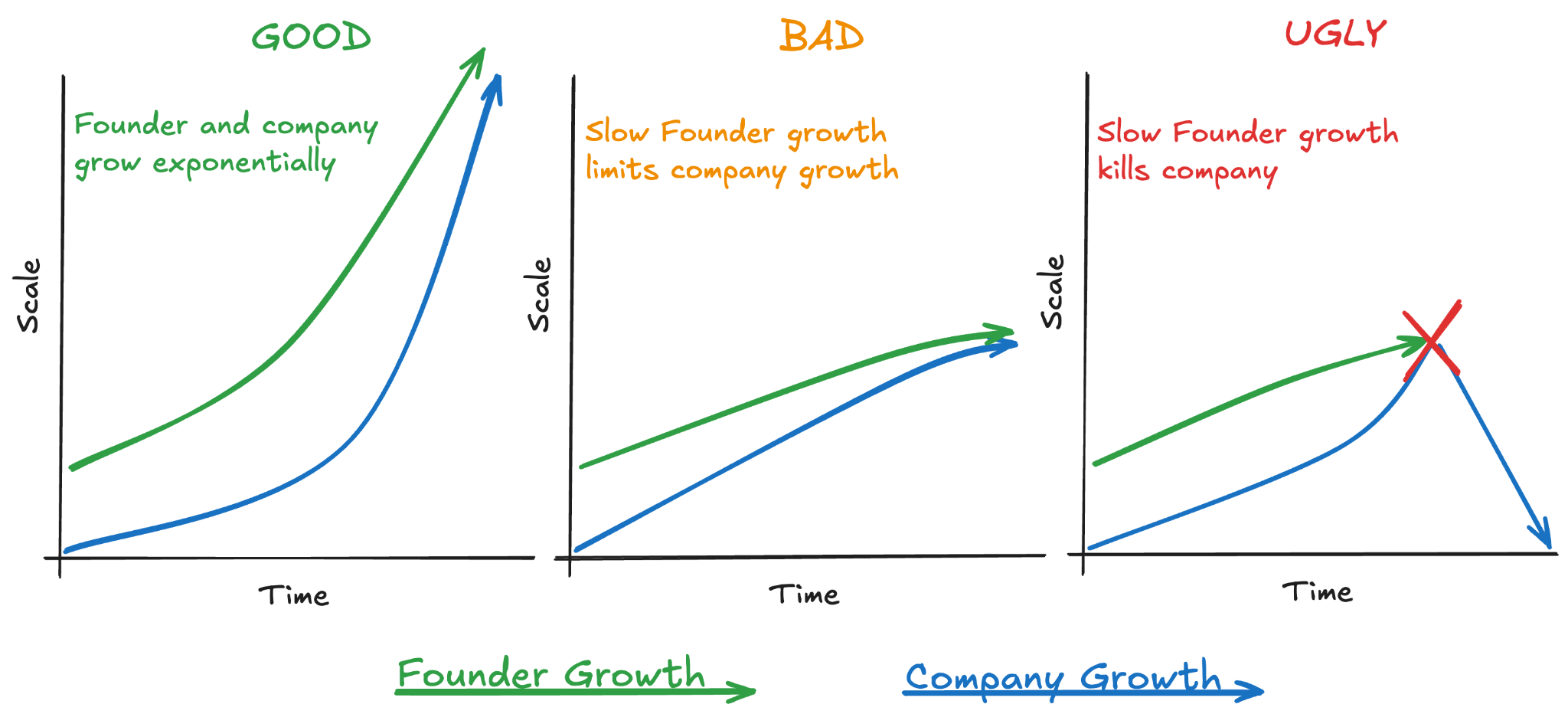
Successful founders are learning machines. The best grow themselves at least as quickly as they grow their companies. This is true whether it’s a first-time founder learning the fundamentals of leadership or a seasoned entrepreneur navigating an entirely new scale of complexity. In the age of AI, this pressure is only increasing. Both software and hardware companies are scaling faster than ever — teams expand more quickly, products iterate faster, and markets move at unprecedented speed. Every stage demands a different version of the founder. When a company begins to outpace the founder’s own development, the consequences are rarely good. Sometimes the founder is replaced; sometimes the organization stalls. Either way, it is often a painful transition that can weaken culture and leave lasting scars on the company.
For Virta's portfolio companies, this plays out in various ways. Real-world systems like housing, energy, and insurance are too complex for any single model to capture. The best insights emerge when diverse expertise — operators, scientists, policy thinkers, and investors — can learn from each other quickly. In The Culture Code, Dan Coyle studied teams from elite athletes to Google and found three consistent ingredients: psychological safety, vulnerability, and shared purpose. These aren't soft ideas — they're the conditions under which collective intelligence gets unlocked.
This is the work. Not just training on new tools, but building the kind of team cultures where the humans working with AI are continuously getting smarter, more self-aware, and better adapted.